
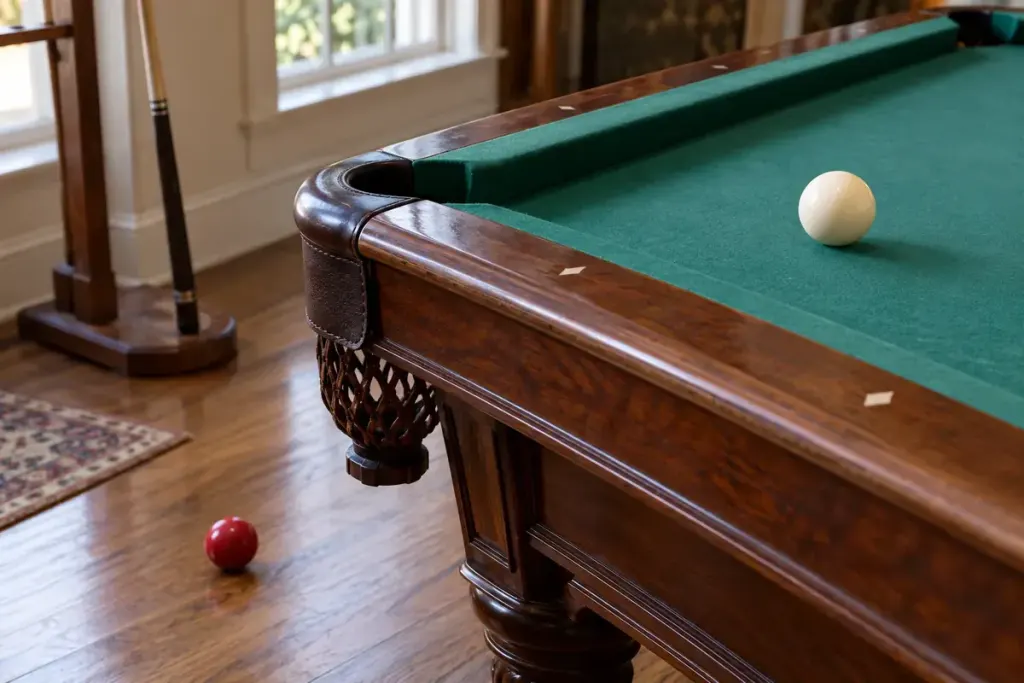
A ball lands on the floor during a pool game. Should it return to the foot spot, remain off the table or end the rack? The answer changes with the discipline and the identity of the ball. Automatically replacing it can create a second problem before the first has been resolved.
The examples below use the World Pool-Billiards Association Rules of Play. A league using another ruleset may differ.
The nine and the eight do not share one outcome
In WPA nine-ball, a nine ball driven off the table is spotted; other object balls are not spotted. Driving an object ball off the table is a foul, so returning the nine does not make the shot legal.
In WPA eight-ball, driving the eight off the table loses the rack on a shot other than the break. The break has its own procedure. This is why the information “it was the eight” still needs the follow-up question “was it the break?”
Also distinguish a ball leaving the playing surface from one that touches the rail top and returns to play or enters a pocket. The rulebook’s definition addresses that distinction and an outside object’s involvement in returning a ball.
Practise describing the incident
Imagine two practice notes: “Nine-ball, the nine leaves the table during ordinary play” and “Eight-ball, the eight leaves during ordinary play.” The physical event looks similar, but the ball’s role in each discipline changes what follows.
Now add a third note in which the eight leaves on the break. Look up that procedure separately instead of carrying over the ordinary-play result. This small exercise helps you remember the relevant conditions rather than memorising a detached penalty.
At the table, wait for the referee’s decision before replacing a ball or positioning the cue ball. Describe what you saw plainly, including the shot and ball involved. A precise account makes the rule easier to apply than an immediate claim that the rack is won or lost.