
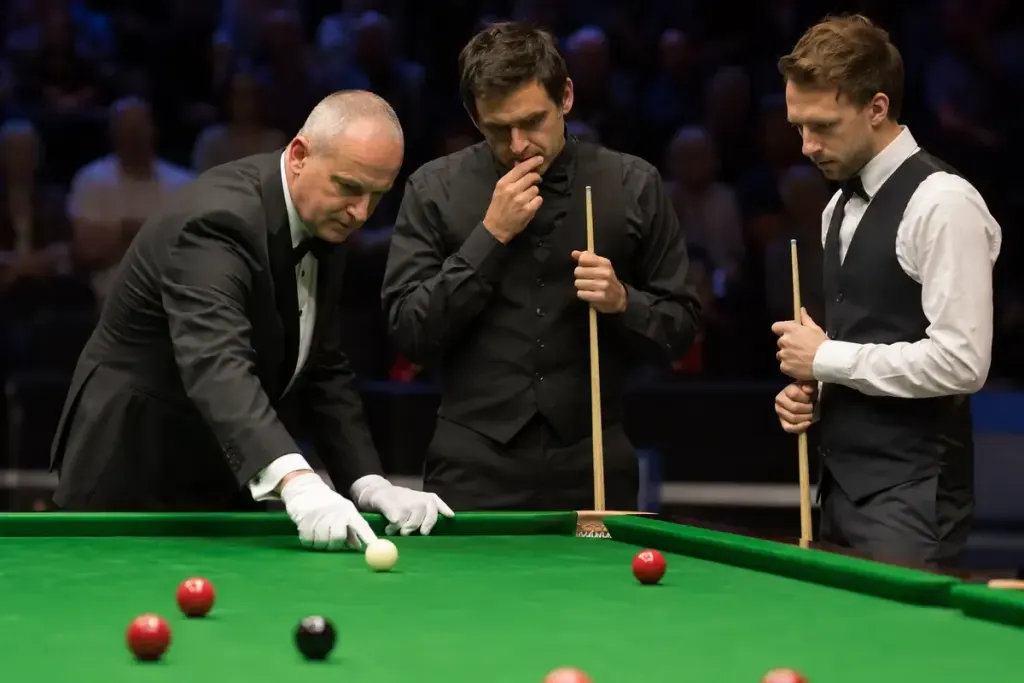
The cue ball fails to reach the required object ball. The referee calls a foul, then adds “and a miss.” For a new viewer, the second phrase can sound like a repetition of the first. It has a separate role in the rules.
The WPBSA’s official rules page provides the current rulebook and amendments. Its foul-and-miss provisions address whether the striker has made the required attempt and set out exceptions and consequences. The decision should not be reduced to “every failed escape is automatically a miss.”
Separate the infringement from the next choice
The foul establishes that a rule has been broken and a penalty applies. A foul-and-miss call can give the non-striker an additional option involving replacement of the balls and another attempt by the offending player, subject to the rule’s conditions.
Watch what the non-striker requests after the call. Sometimes the next stroke is played from the resulting position; in another situation the referee restores the previous arrangement. Those are meaningful decisions, not merely a delay in the broadcast.
Use the whole position when learning
Note which ball was on, the route attempted and what the referee says. The score and whether snookers are needed can also matter under the detailed provisions. A short replay of the final few centimetres of travel may not show enough context.
For practice discussion, pause before hearing the decision and describe only what you can see. Then compare the official call with the relevant rule. This helps separate observation from an assumption about the player’s intent.
Club competitions may publish their own playing conditions, so confirm what applies before a match. When a dispute arises, refer it through the competition’s officiating process. Understanding the two-part call makes the next choice easier to follow without pretending that every difficult position can be judged from one camera angle.