
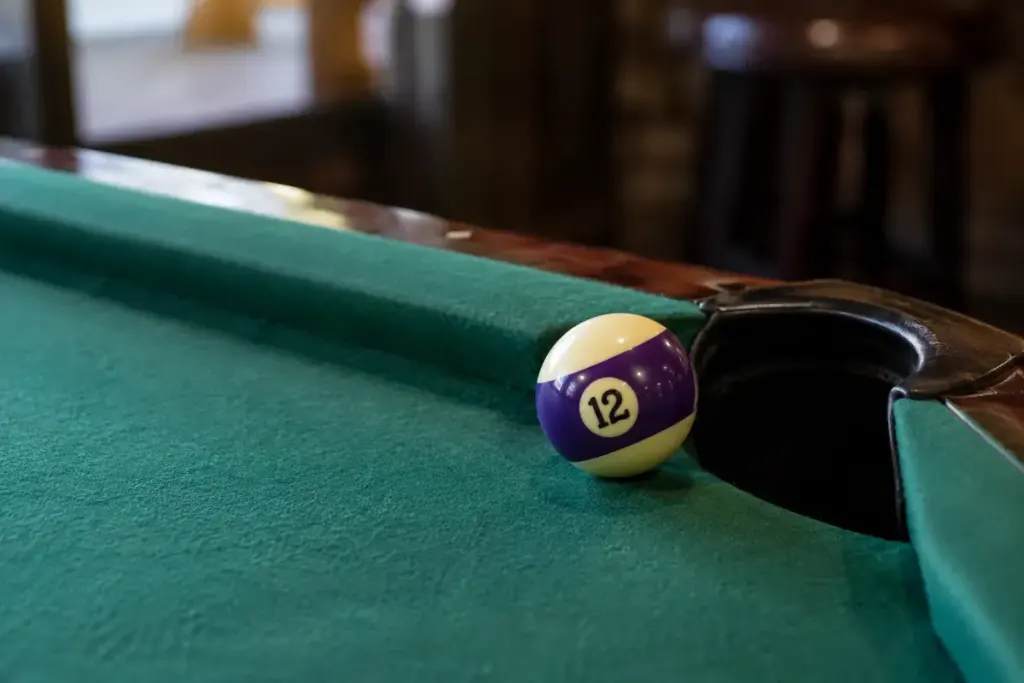
The object ball stops at the mouth of a pocket. Everyone waits. A moment later it drops, and the players disagree about whether the shot has suddenly become successful. The answer depends on the rules being used and the timing, not simply on where the ball ends up.
The WPA Rules of Play include provisions for balls settling and the definition of a pocketed ball. Under those rules, a ball that remains apparently motionless at a pocket edge for five seconds after the shot is over is not counted as pocketed if it later falls by itself.
Keep the table undisturbed
While the outcome is uncertain, do not tap the rail, blow at the ball or begin another shot to hurry the decision. Give the referee a clear view. In a match without an official, stop and establish the applicable rule before either player changes the layout.
Consider two illustrative situations. In one, the ball is still completing the shot and drops. In the other, it has remained apparently motionless beyond the specified period and falls later. Treating both as identical ignores the distinction the settling rule is designed to make.
A late fall can affect more than the score
If a settling ball falls during or just before a later shot and affects that shot, the rules contain further directions for restoring the position and replaying where applicable. Leave those decisions to the referee. Picking up balls yourself can make a fair restoration harder.
The details also depend on the discipline and rule set. Do not carry a remembered ruling from snooker, a local bar game or another pool organisation into a WPA match without checking. Agree the rules before the rack begins, especially when a tournament uses its own published modifications.
For spectators, the useful observation is the sequence: when the shot finished, whether the ball appeared stationary, when it fell and whether another shot was affected. That timeline explains the dispute better than a photograph of the empty pocket mouth after everything has happened.