
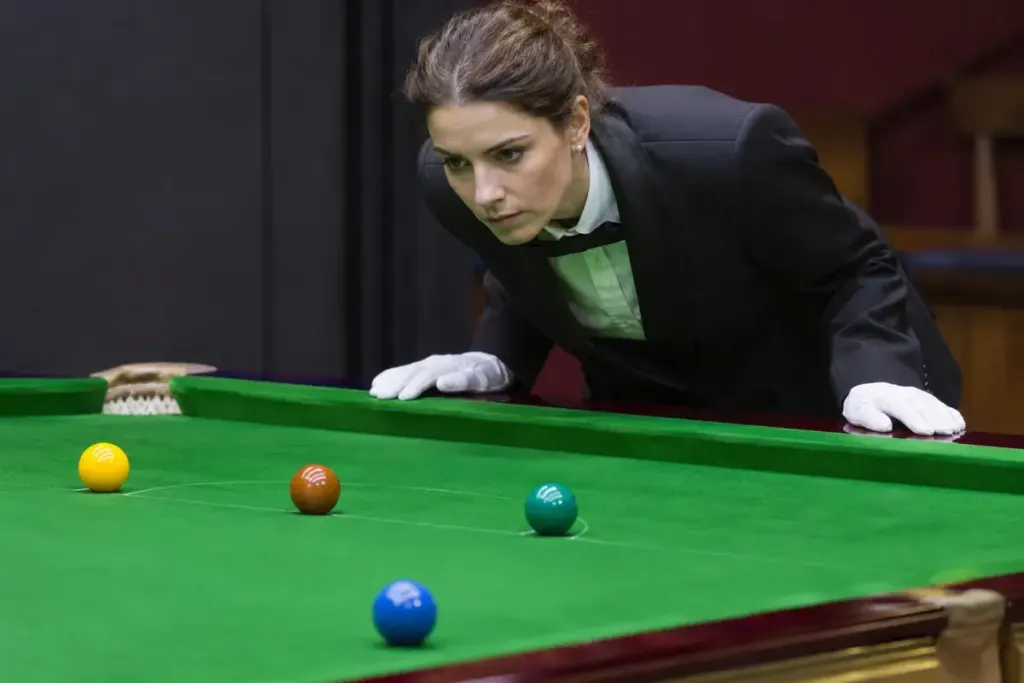
A referee lifts a potted colour from the pocket, looks at its usual spot, then walks to a different part of the table. That pause follows a defined order. An occupied spot does not give the referee a free choice of a convenient location.
Start with the highest available spot
Under the spotting provisions in the WPBSA rules of snooker, a colour whose own spot is occupied is placed on the highest-value available spot. “Available” matters: the colour must be positioned without touching another ball.
For an illustrative example, imagine that pink needs to be spotted and its own spot is occupied. If the black spot is available, that is the first alternative. If it is occupied too, the referee works through the remaining spots in descending value. The player does not choose a location based on which next shot looks preferable.
When no spot is available
The rules provide a further procedure using a position as close as possible to the colour’s own spot on the prescribed line towards the top cushion. Pink and black also have a specified alternative when the relevant space above their spots cannot be used. This is a situation for the exact rule text and the referee’s assessment, not an improvised gap elsewhere on the table.
When several colours need spotting, their order matters as well: higher-value colours are dealt with first. That can determine which spots remain available for the others. Watch the sequence rather than judging a single final position from a photograph.
In a club game, agree who will handle a disputed spotting decision before moving the balls. Avoid nudging a nearby ball to make the preferred spot work. If you are learning, recreate a simple occupied-spot situation between frames and consult the current rulebook together.
The unusual placement is temporary. It does not rename the spot or permanently move the colour’s home position for the rest of the match. Once you know the order, a referee’s brief inspection becomes easier to follow—and you can concentrate on how the changed layout affects the next shot.