
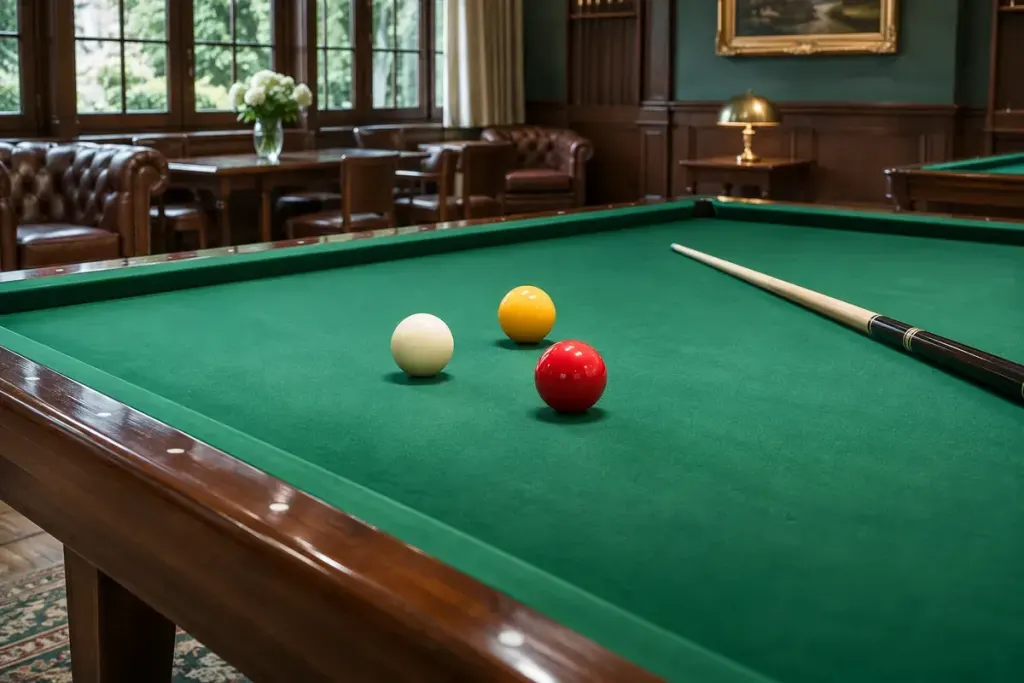
Watch three-cushion billiards for the first time and the table can seem to be missing something: there are no pockets. The challenge uses three balls and a scoring sequence built around the cue ball’s contacts. Following that sequence makes a seemingly wandering shot much easier to read.
The second object ball is the counting deadline
For a scoring carom, the cue ball must contact both object balls and make at least three cushion contacts before reaching the second object ball. The World Confederation of Billiards Sports’ carom guide explains this essential condition.
The cushion contacts need not all happen between the two object-ball contacts. A route can reach the first object ball, take three cushions and then reach the second. Another route can take cushions before reaching either object ball, provided the required count is achieved before the second object ball is contacted. Other rules still apply to whether the stroke is legal.
Count contacts rather than different sides
Three cushions does not mean three distinct rails. The cue ball can contact the same cushion more than once, and those separate contacts can contribute to the required count. Watching only how many sides of the table the ball visits can therefore give the wrong answer.
Nor can a cushion contact after the second object ball rescue a short count. The important moment has already passed. When reviewing a video, pause at that second object-ball contact and reconstruct what happened before it.
A simple spectator’s exercise
Pick one shot and follow only the cue ball. Say “first object” when it touches the first target, count each cushion contact, and stop counting when it reaches the other target. Repeat with a route that takes a cushion first. This helps separate the required events from the many possible orders in which they can occur.
For actual play, learn the full competition rules, including fouls and special positions. But as a starting point for watching, the second-object-ball deadline gives the geometry a clear purpose: the route must satisfy a sequence, not merely look spectacular.