
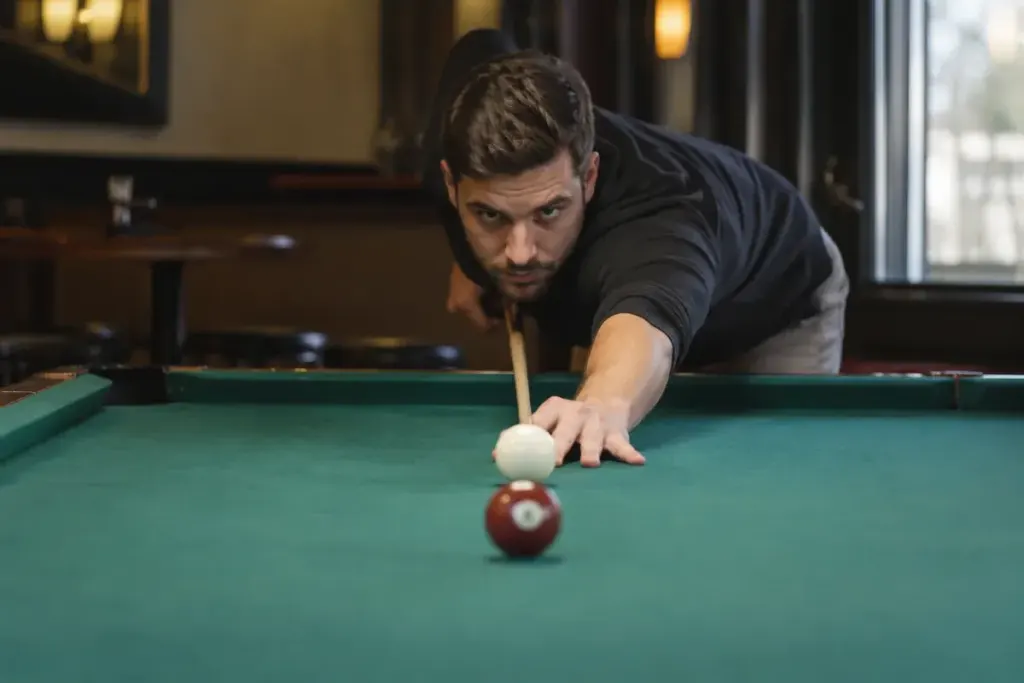
A long pot that rattles into the pocket feels memorable. A short straight shot in which the cue ball stays where you intended can tell you more about the control you will use throughout a rack.
The stop shot is a useful benchmark because its objective is easy to see: pot the object ball with a straight, full contact and leave the cue ball near the contact point. The difficulty is making that result repeatable rather than accidental.
Understand the condition at impact
Dr. Dave’s stop-shot explanation describes it as a straight stun shot: the cue ball has no forward or backward spin when it reaches the object ball. That condition at impact matters more than describing every attempt as a “centre-ball hit”.
Distance, speed, tip contact and the cloth affect what happens before the balls meet. A cue ball that begins with backspin can lose it along the way; one that reaches the object ball rolling forward will not behave like a stop shot. Do not assume the same stroke gives the same result from every distance.
Make the first setup deliberately ordinary
Choose an easy straight pot with a manageable distance between the balls. Use the table’s reference points, or removable markers only if the venue permits them, to recreate the positions. Avoid putting adhesive or marks on someone else’s cloth without permission.
Play a short set of attempts. Record whether the object ball went in and whether the cue ball stopped, rolled forward, drew back or moved sideways. Keep those outcomes separate: potting the ball does not automatically mean the cue-ball objective was achieved.
Change one thing you can describe
If the cue ball consistently rolls forward, review the stroke with a coach or a reliable technical demonstration. Adjust one variable, then repeat the same layout. Changing speed, distance and tip position together may improve one shot without teaching you which change mattered.
A phone recording from a safe position can help you compare intended and actual cue delivery. Ask the venue and other players before filming, and keep the device clear of the playing area.
Extend the distance after the pattern is useful
Once the short setup is reasonably consistent, increase the separation slightly. Expect to make a controlled adjustment rather than copying the first stroke blindly. Note the new layout and result so the next visit begins with a meaningful reference.
Finally, place an imaginary next shot in the exercise. Ask whether the cue-ball result would leave a comfortable position for it. That connects a quiet technical drill with the real reason to learn the shot: choosing where the cue ball will be when your turn continues.