
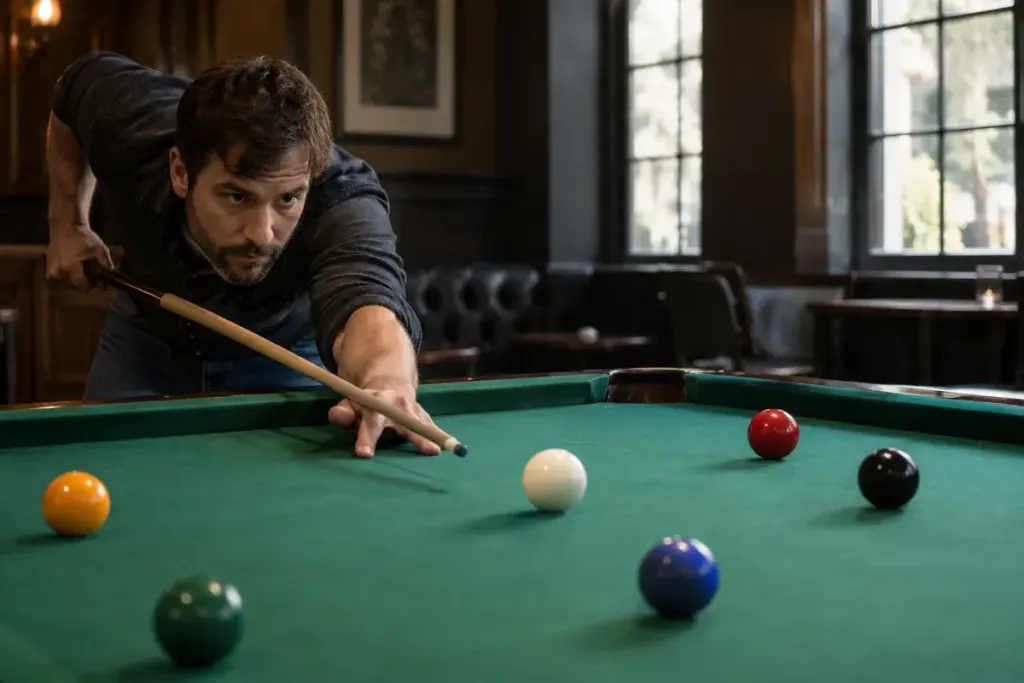
The object ball catches the jaw and stays out. You turn away before the cue ball stops. That reaction is understandable, but it throws away half the information the shot offered.
A missed pot can still show whether your planned cue-ball route made sense. Watch to the end, then separate the result into two questions: did the object ball go where intended, and did the cue ball reach a useful area?
Choose an area rather than a perfect dot
Before shooting, identify a realistic position zone for the next ball. A broad, useful area is often a better learning target than an exact point. Make sure the route is compatible with the pot rather than adding difficult spin simply because it looks impressive.
Dr Dave’s discussion of cue-ball speed control explains why speed is a major part of position play. Its technical material provides a reference for understanding the movement; your practice should still be matched to your current ability.
Record the two outcomes separately
Use a small grid with “pot” and “position” columns. A missed pot with sensible speed is different from a successful pot followed by the cue ball travelling far beyond the next shot. Neither result needs to be disguised as complete success or failure.
For an illustrative drill, set a comfortable object-ball position and nominate a generous cue-ball zone. Repeat the same setup a few times. Use removable markers only if the table owner permits them, and avoid anything that could damage or contaminate the cloth.
Change the easiest variable first
If the pot is inconsistent, simplify the shot before demanding precise position. If the pot is reliable but the cue ball repeatedly overruns, review speed while keeping the intended contact and route as consistent as possible. Changing aim, pace and spin together makes the feedback harder to read.
Ask an experienced coach to check technique if the results remain erratic. A video from a suitable angle, recorded with the venue’s permission, may reveal movement that feels invisible during the stroke.
Finish practice with one observation you can use next time: “The cue ball reached the zone when I reduced speed,” rather than “I missed too much.” Watching the ball after the disappointment keeps the session useful—and makes the next decision less dependent on memory or mood.