
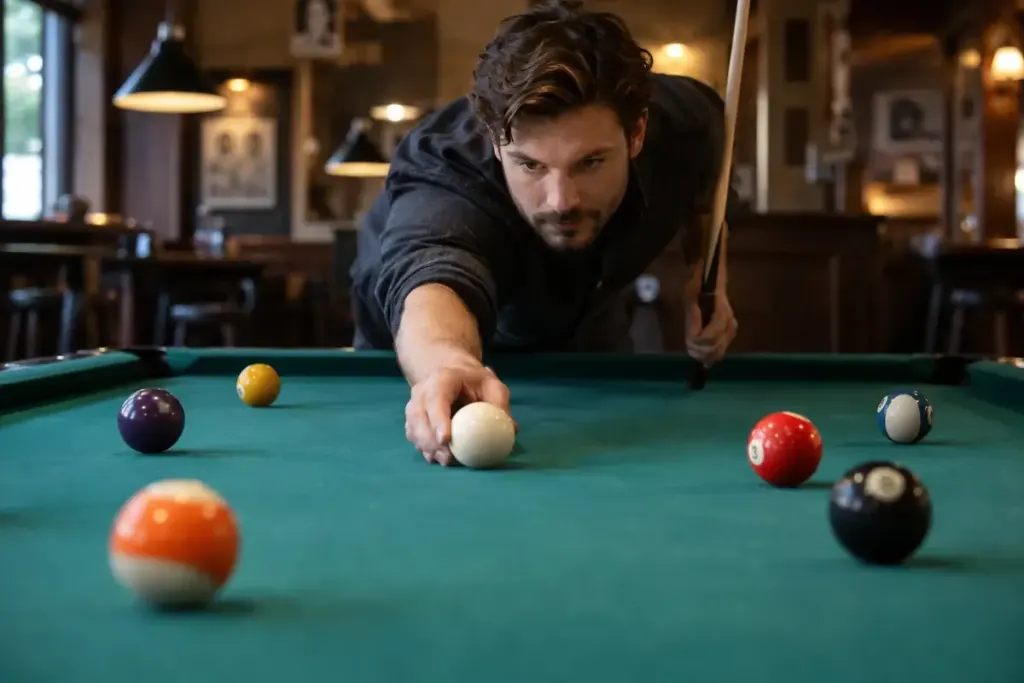
Your opponent fouls and offers you “ball in hand”. You pick up the cue ball, but pause before placing it beside an easy shot. Does the current rule allow placement anywhere on the playing surface, or only in a restricted area?
The phrase alone does not answer every placement question. The discipline, situation and governing rules matter, particularly when a break-shot rule differs from an ordinary foul.
Find the placement rule and the next-shot rule
The WPA Rules of Play describe cue-ball placement and restrictions that apply in particular disciplines and situations. Some play is restricted by the head string, while other ball-in-hand situations allow wider placement. Read the applicable discipline alongside the general rule.
Do not stop at identifying the permitted area. Check what the next stroke must do, including which object ball can be contacted legally. A cue ball placed in a legal spot does not automatically make the intended shot legal.
Practise placement as a decision
In a practice session, set up two or three object balls and choose a clearly stated ball-in-hand situation under your agreed rules. Before placing the cue ball, identify the legal target, the intended pocket and where you would like the cue ball to finish.
Try two legal starting positions. One may make the pot easier but leave awkward position afterwards; another may create a more comfortable route while demanding a harder first shot. Record the difference rather than moving the cue ball repeatedly until one attempt happens to work.
Keep the exercise separate from a scored game. Repositioning is part of the drill, not something to assume you can continue doing after a stroke has begun. Follow the applicable rules for adjustment and avoid disturbing other balls.
If a dispute arises in competition, stop and ask the referee before playing on. In casual play, consult the selected rules together. The useful habit is to turn “ball in hand” from a vague advantage into a specific, legal starting position you can explain.