
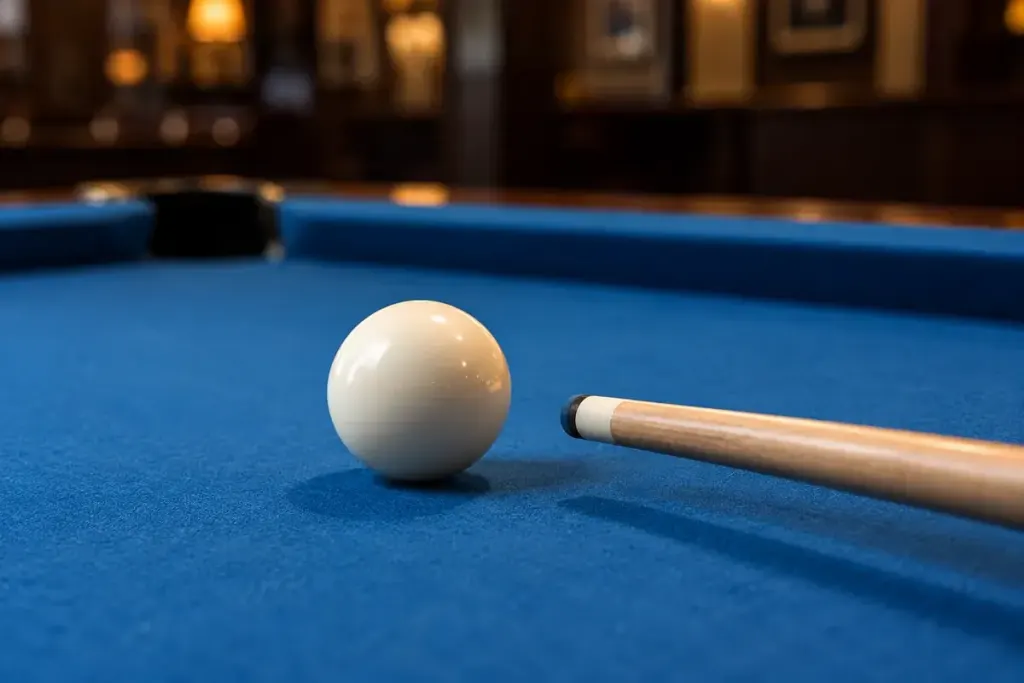
The nine is near a pocket and looks inviting. Whether you may shoot directly at it depends on what else remains on the table. In nine-ball, the easiest pot is not automatically the legal first target.
The World Pool Association rules require the cue ball’s first object-ball contact on an ordinary shot to be with the lowest-numbered ball remaining. The lowest ball does not have to be the one pocketed. The permitted push-out after the break is a specific exception with its own procedure.
Separate first contact from the scoring idea
Imagine the two, six and nine remain. A direct shot into the six first is not made legal by pocketing it. A shot that contacts the two first and then sends another ball toward a pocket must still satisfy the other requirements of a legal shot.
This distinction explains why players look beyond the apparent pot. They need a legal route to the lowest ball, then a useful result after that contact. Sometimes the useful result is a safety rather than a pocketed ball.
A beginner’s table-reading exercise
- Place three numbered balls in open positions.
- Identify the lowest number before taking your stance.
- Name the intended first contact aloud.
- Describe where you want the cue ball to finish.
- After the shot, compare the actual route with that description.
Keep the exercise simple at first. Do not add combinations until you can reliably distinguish a legal first contact from a tempting direct shot. When practising with someone else, agree which published rules and any local variations you are using before starting.
The break, push-out, fouls and winning conditions deserve their own reading in the rulebook. This exercise isolates one foundational decision, not the entire game. Make “Which ball must I contact first?” your first question each turn; it gives the rest of your shot planning a legal starting point.