
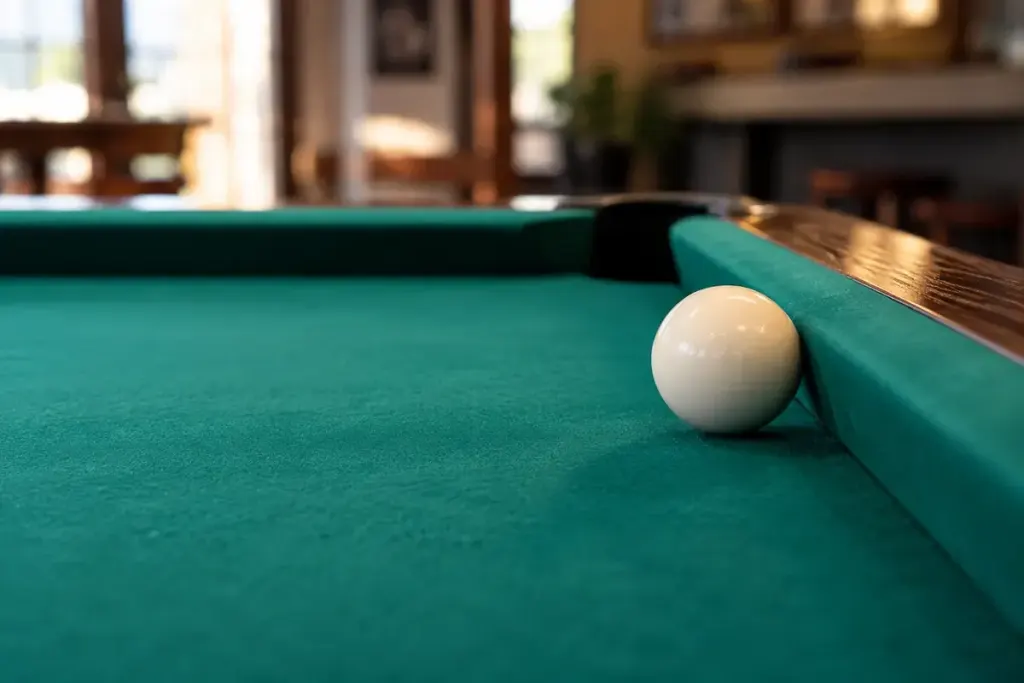
A ball appears to be touching the cushion. From the other side of the table, your opponent thinks there is a small gap. This is a useful moment to pause, because the starting position can matter to how a shot is judged.
Describe which balls are touching
“Frozen” can describe contact with a cushion or contact between balls. Those are different situations. Identify whether you are discussing the cue ball, an object ball or both, and ask the referee to inspect the position where one is available.
The World Pool-Billiard Association’s rules and regulations distinguish rail contact and frozen-ball situations. A ball already touching a rail is not automatically credited with a new rail contact merely because it remains beside it. The precise shot and game rules determine what must happen next.
Resolve the status before movement
In a casual game, agree the rule set and ask both players to look without touching any ball. Do not insert an object to test a gap or move a ball to recreate what you think the position was. In a refereed match, follow the official’s procedure.
For an invented practice setup, place an object ball near a cushion and compare a clearly visible gap with genuine contact. Observe from different positions while staying clear of the table. The exercise shows how a viewing angle can create uncertainty; it does not replace an official decision.
Keep the legal contact separate from the aiming problem
A difficult cueing position may tempt a player to focus only on getting the cue tip to the ball. The shot still has to satisfy the game’s requirements for first contact, subsequent rail contact where required, and avoidance of other fouls.
If the cue ball is close to another ball, double-hit rules introduce a separate concern. Ask an instructor to demonstrate legal technique rather than improvising a forceful stroke during a disputed game.
The most useful habit is procedural: name the question, inspect before the shot and use the same published rules throughout. That prevents a small gap at the cushion from becoming a much larger disagreement after the balls have moved.