
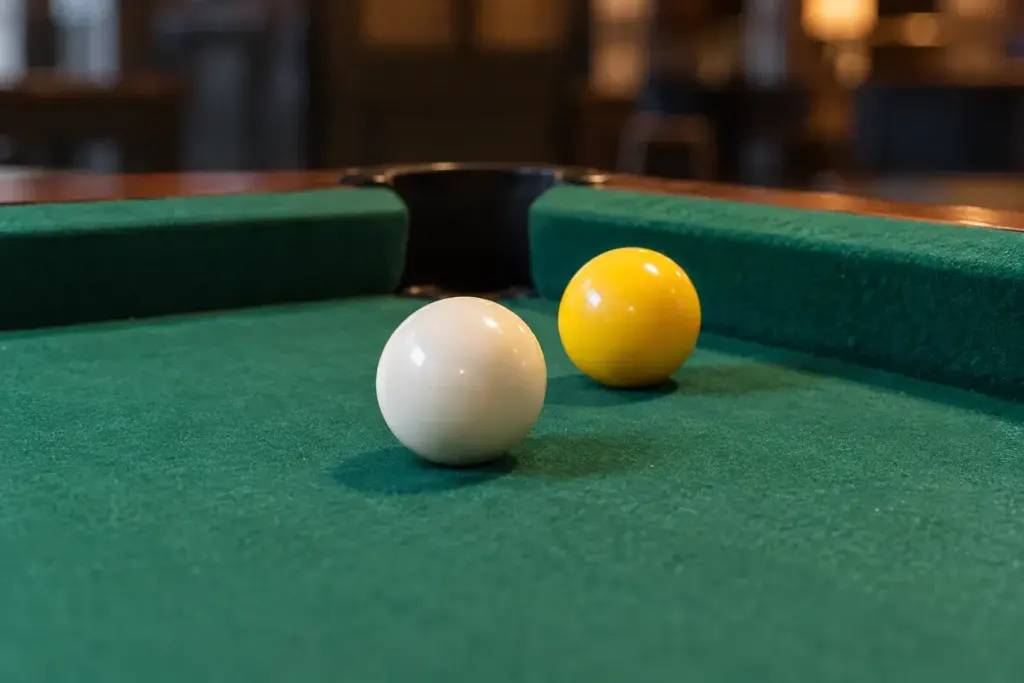
Before the first rack, two players may send a ball down the table and back. The quiet shot can decide who chooses the opening break, yet it rewards a different skill from a powerful break: controlling the return distance.
The World Pool-Billiard Association rules explain the formal lag and the conditions that can lose it. Check the rules adopted by your match or league. A casual “nearest the cushion” agreement may omit details that matter in competition.
Learn the table with a repeatable stroke
For practice, use the same legal starting area and aim at a consistent point on the far short cushion. Keep the cue action uncomplicated. Changing aim, spin and strength on every attempt makes it difficult to discover what controls the result.
Watch the return rather than looking only at the final resting place. Did the ball travel straight? Did it reach the far cushion with more pace than expected? Was the stroke smooth or jabbed? Note the answer before trying again.
A small practice set can have one objective: reduce the spread between your shortest and longest returns. You do not need to turn each attempt into a contest with another player.
Do not invent the match procedure
Before the official lag, confirm when players shoot, where the balls start and what makes a lag invalid. Pocketing a ball or making an impermissible contact is not rescued by finishing close to the target cushion. Ask the referee about any uncertainty before shooting.
Table conditions can differ from those at home. Cloth, cushions and cleanliness influence how a familiar stroke behaves. Use only the warm-up allowed by the event, and keep practice separate from the official attempt.
The most useful takeaway is a more sensitive sense of distance. Even when your league uses a coin toss for the first break, a controlled down-and-back shot gives you information about the table that hitting harder cannot provide.