
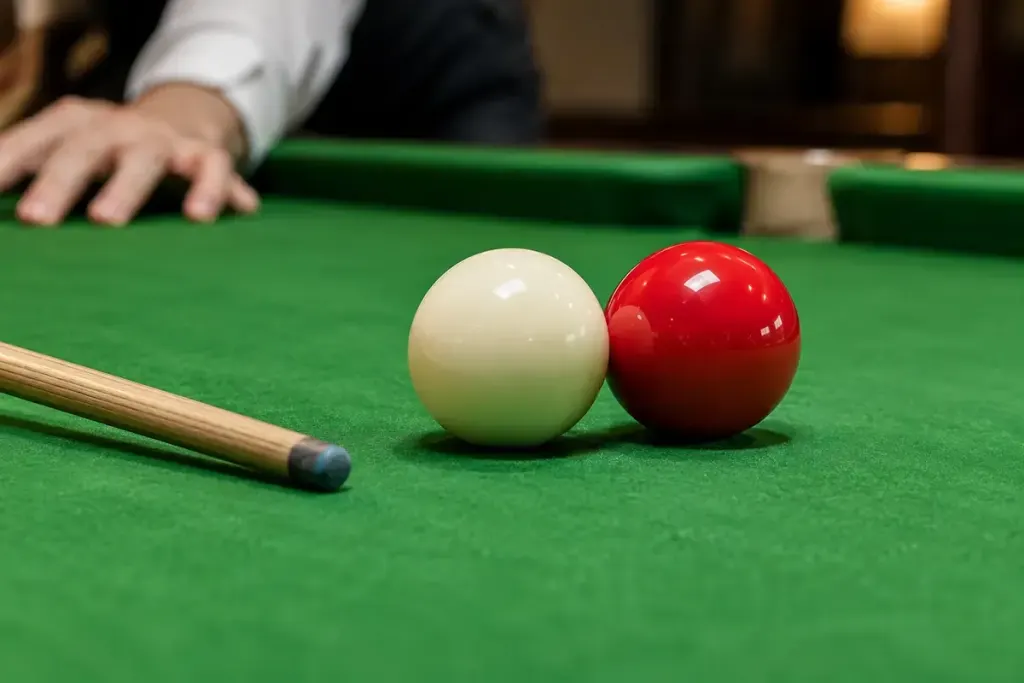
The cue ball comes to rest against a red. Before the next shot, the referee calls touching ball. The player now has a rule to account for as well as a position to solve.
The WPBSA rules of snooker explain touching-ball situations according to which ball is on. In the straightforward case where a red is on and the cue ball touches a red, the striker must play away without moving that red; the contact requirement is treated as satisfied.
Start by identifying the ball on
Do not apply that example blindly to every ball the white happens to touch. A colour, a nomination situation or contact with more than one object ball needs the corresponding rule. Ask the referee to confirm the situation before addressing the shot if anything is unclear.
In a casual game without a referee, agree the position with the other player without disturbing the balls. Leaning close to inspect is useful only if clothing, equipment and hands remain clear of the table’s layout.
Play away rather than through
A common beginner’s mistake is to imagine that the touching object ball should be nudged first. In the simple touching-red example, that is precisely the movement to avoid. The cue-ball direction and controlled delivery must allow separation without pushing the red.
For practice, set up the situation with a coach and no scoring pressure. First identify the legal requirements, then examine possible cue-ball paths. Keep the rules exercise separate from trying to escape to an ambitious safety position at the other end of the table.
Touching ball is not a free ball, and it does not grant permission to ignore every other foul. Those terms refer to different situations. When reviewing a televised frame, listen for the referee’s call and identify the ball on before explaining the player’s choice. A small detail at the cue ball can change the legal options for the whole shot.