
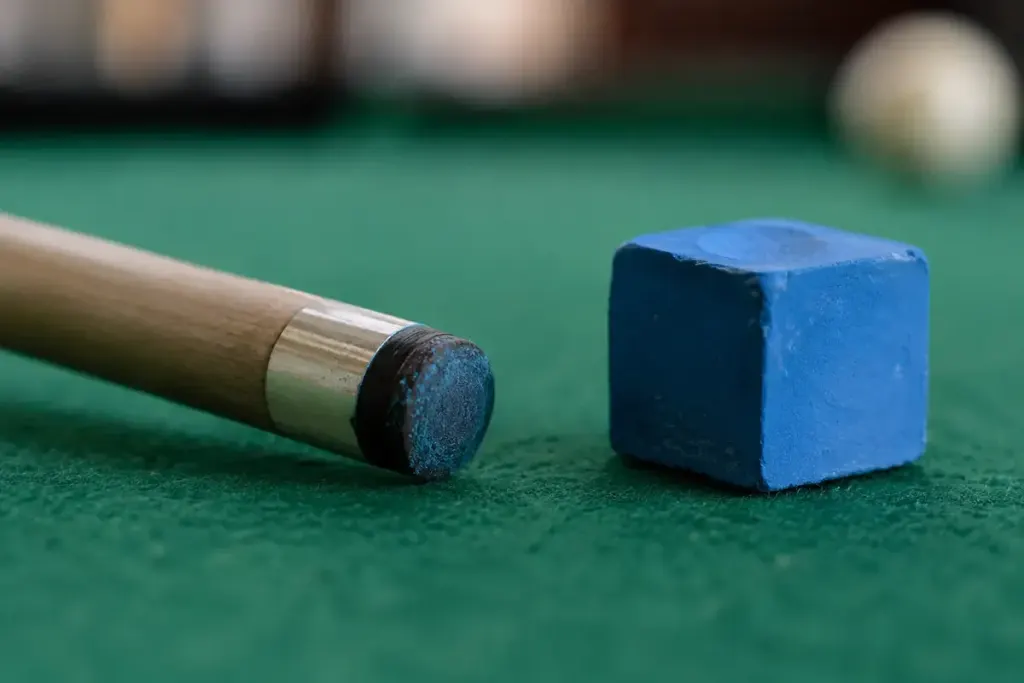
A miscue makes a dramatic noise, but the preparation before it is usually quiet. The cue tip may have a poorly covered patch, or the stroke may have reached the cue ball somewhere other than intended. Chalking is worth checking before treating every miscue as a mysterious technical failure.
Look at the tip rather than twisting blindly
Inspect the leather tip in good light. Apply chalk with light, controlled contact across its playing surface, turning the cue to see whether coverage is even. Avoid drilling the tip hard into a deep hole in the chalk cube; that can leave you rubbing the sides while missing part of the surface.
Use the table operator’s preferred chalk and care rules. Keep the application away from the cloth, and put the cube down so loose chalk does not mark a surface someone will touch or play on. Do not strike the cue against the table to remove excess.
Test an ordinary shot first
After preparation, play a straightforward shot with a comfortable, controlled stroke and a contact point near the cue ball’s centre. Check whether the tip travels where you intended. Trying extreme spin immediately adds another variable and makes diagnosis less useful.
If a miscue repeats, note the intended contact point, speed and what you actually saw. A damaged or badly shaped tip may need competent maintenance, but repeatedly sanding it is not a substitute for assessing the stroke. Ask a coach or experienced technician before removing material.
Give the habit a place in your routine
Inspect and chalk when needed as part of the preparation before addressing the ball. Once down on the shot, concentrate on alignment and delivery rather than wondering whether the tip is ready.
A small practice comparison helps: use the same uncomplicated shot, prepare the tip consistently and watch the actual cue-ball contact. That separates equipment preparation from the temptation to make several technical changes at once. Reliable chalking will not aim the cue for you, but it removes one avoidable uncertainty.