
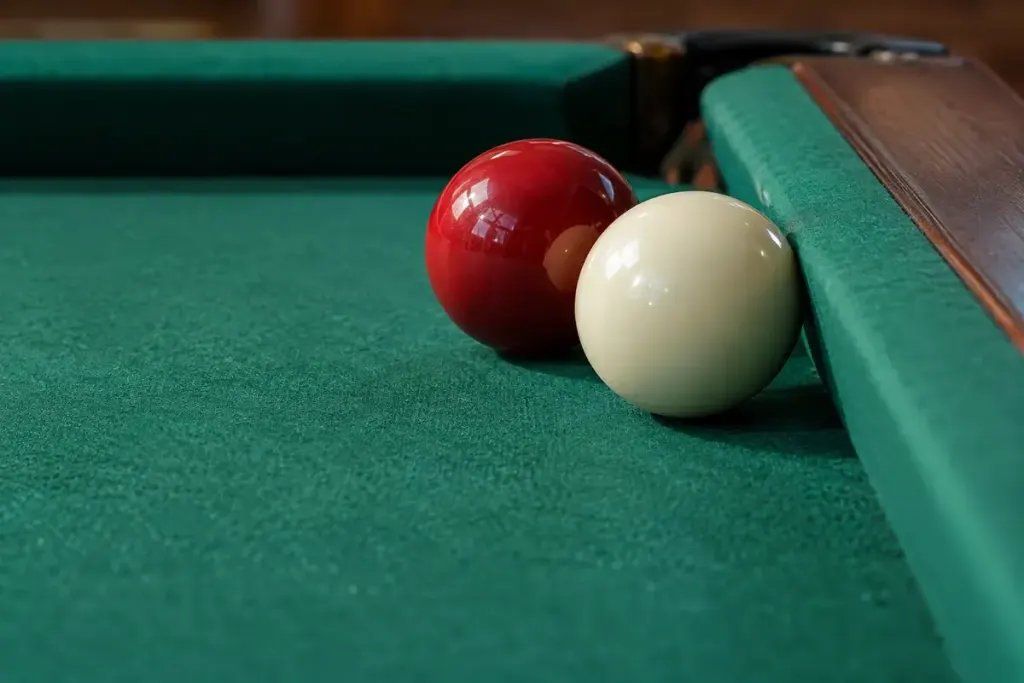
The object ball reaches the cushion on the intended line, then seems to jump away from the expected return path. Before blaming the cushion or adjusting your aim, check whether it struck the cue ball again. That second collision is commonly called a double kiss.
Follow both balls through the rebound
On a practice table, choose a simple bank with plenty of clear space and use a controlled stroke. Watch where the cue ball travels after the first contact. If it remains in the object’s return route, the shot can contain a second collision that changes both paths.
A phone recording from a safe position can help you see the sequence, provided the venue permits filming and no other players are obstructed. Do not judge the shot only from the pocket result. A miss after a second contact is a different problem from a clean bank aimed at the wrong point.
Change one part of the layout
Mark the starting positions using a method allowed by the venue, or make a small sketch. Move the cue ball slightly for the next trial while keeping the object ball and intended pocket the same. Notice whether the cue ball clears the return path. Then restore the original layout before making another comparison.
Speed and spin can affect the paths, but changing them all at once makes diagnosis difficult. Begin by identifying the collision. An experienced instructor can help choose a suitable route rather than encouraging a harder hit as the default answer.
Record three observations: the first cushion contact, the cue ball’s position at that moment and whether the balls meet again. This is more informative than a practice log containing only “bank missed left.”
In a game, a different shot or a safety may be more sensible than forcing a bank with a troublesome return path. The practice lesson is to recognise the extra collision early enough that it becomes part of the decision, rather than an unexplained surprise after the stroke.