
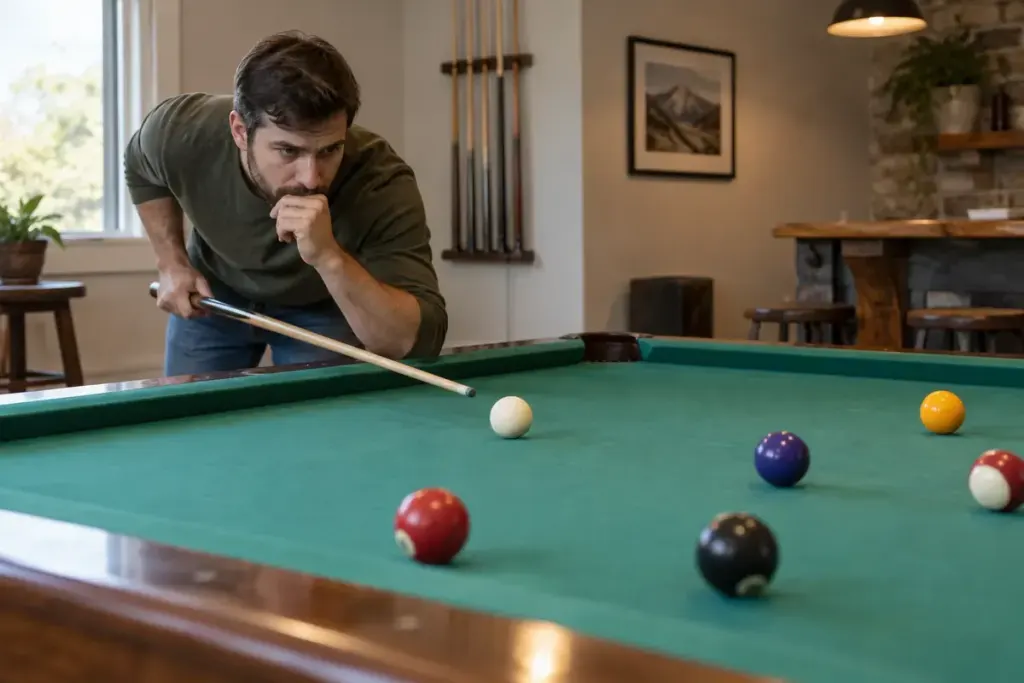
The pot is possible, but missing it would leave the opponent an easy table. This is the moment when a safety shot becomes a choice rather than an apology. A defensive turn can be useful even when no ball falls.
The objective is to leave a less comfortable reply while playing within the rules of the game. That may involve distance, an awkward angle or using other balls to limit a direct route. The exact legal requirements depend on the discipline and agreed rules.
Choose the destination before the stroke
Look at where both the object ball and cue ball are likely to finish. A gentle hit is not automatically safe. It can leave the object ball near a pocket and the cue ball in the middle of the table, making the next player’s task easier.
For a simple practice exercise, set up a familiar legal shot and choose a broad target area for the cue ball. Play at different controlled speeds and observe the final position. The exercise is about understanding outcomes, not claiming that one arrangement is the correct defensive solution in every game.
Judge the opponent’s options
After the shot, walk around the table and assess the reply. Is there a straightforward pot? A simple route to improve position? A legal escape that leaves you worse off? This view can explain why a shot that looked impressive from your original position did not create much difficulty.
Confirm the relevant safety-call and foul rules before a match. Do not borrow a rule from another pool game just because the tables and balls look similar.
Keep practice focused on repeatable control. A successful safety is not measured by how far the cue ball travelled or how quietly you struck it. It is measured by the situation left for the next player and the risk you accepted to create it.