
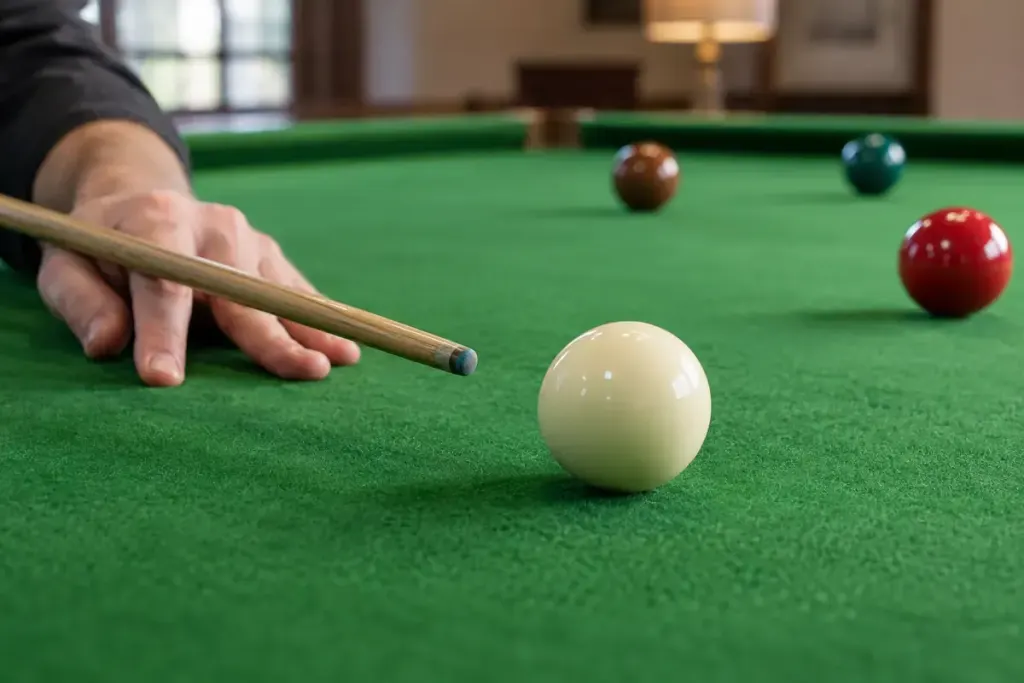
A gentle shot is not automatically a push stroke, and a powerful shot is not automatically free of one. In snooker, the question is what happens while the cue tip, cue ball and other balls are interacting.
The WPBSA rulebook defines a push stroke through continued cue-tip contact: after the cue ball has begun its forward motion, or when it contacts an object ball, subject to the rule’s stated exception for an almost touching ball hit on a very fine edge.
Notice close positions before choosing the stroke
When the cue ball is very near another ball, there is little distance in which the normal contact sequence can separate. That makes the setup worth assessing before the player gets down on the shot. A long follow-through is not, on its own, a complete explanation of what happened at impact.
Do not confuse this with every touching-ball situation or import a rule from a different pool discipline. Ask which game’s rules apply and consult the relevant section in full.
A useful practice conversation
With a coach or qualified referee, set up a few close-ball positions and discuss the available legal options before attempting them. Keep the exercise about understanding contact and shot selection, rather than trying to exploit a borderline movement.
A phone recording may help you discuss the stroke, but ordinary footage can miss the brief contact being judged. It should not be treated as definitive merely because it can be slowed down.
During a match, request clarification through the normal refereeing process rather than moving the balls to demonstrate your argument. In a casual game, agreeing the rules beforehand prevents a disagreement from becoming a new house rule halfway through a frame.
The most useful habit is an early pause: if the spacing looks awkward, understand the restriction before committing to the shot.