
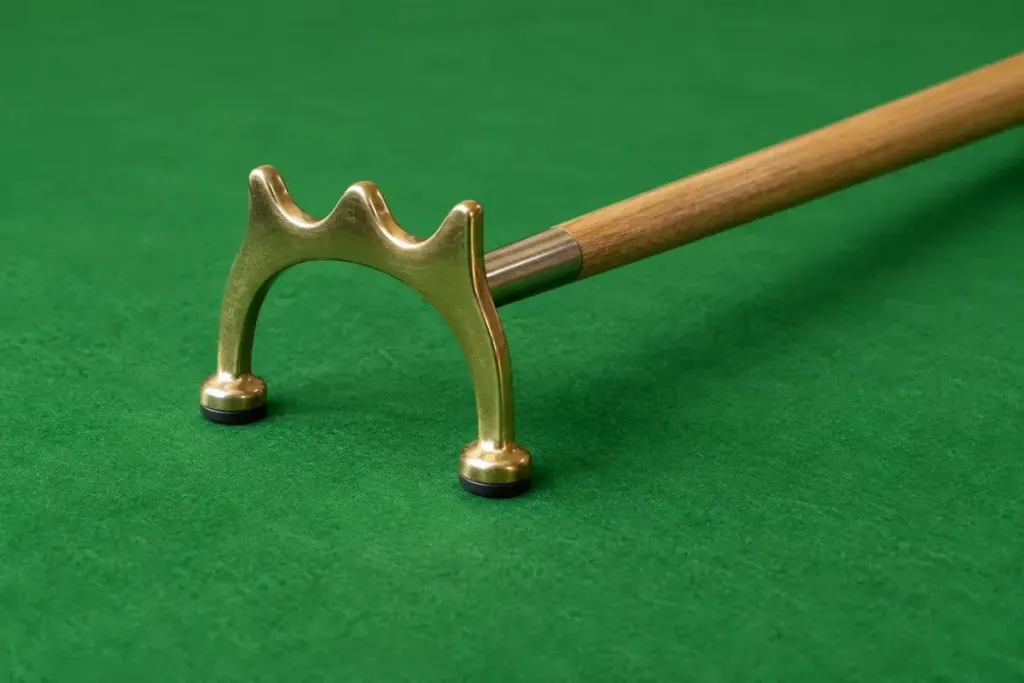
The cue ball is reachable, but another ball blocks the low path an ordinary rest would occupy. A spider rest provides a raised support with legs designed to create clearance. That extra height solves one problem while introducing another: the cue and rest still need a stable, unobstructed position.
Choose the equipment with a coach or experienced player before attempting the shot. A spider is not a universal answer to every awkward reach. The position of nearby balls, the required cue elevation and the available support points all matter.
Place the rest before building the stroke
In practice, lower it carefully into an empty area of cloth without touching a ball. Check both the feet and the shaft of the rest. A support that looks clear from behind the cue may pass close to an object ball at another point along its length.
Set the cue into the suitable support notch and rehearse a short, controlled movement. Keep the cue path clear of the raised frame. Do not increase elevation merely because the rest permits it; unnecessary steepness can make delivery harder to control.
Use a simple, low-power practice shot first. The purpose is to learn placement and balance, not to combine unfamiliar equipment with a difficult positional target. If the arrangement feels unstable, step away and reconsider it rather than trying to complete the shot quickly.
Removal is part of the routine
After striking, lift and withdraw the equipment deliberately, keeping it clear of moving and stationary balls. Practise this sequence on a quiet table so the last action does not undo an otherwise controlled shot.
In a match, follow the applicable rules and any referee instructions about equipment. A raised rest helps you reach a legal stroke; it does not permit contact with balls or cloth damage. Familiarity comes from repeating the whole sequence—position, rehearse, strike and remove—not merely recognising the distinctive shape hanging beneath the table.