
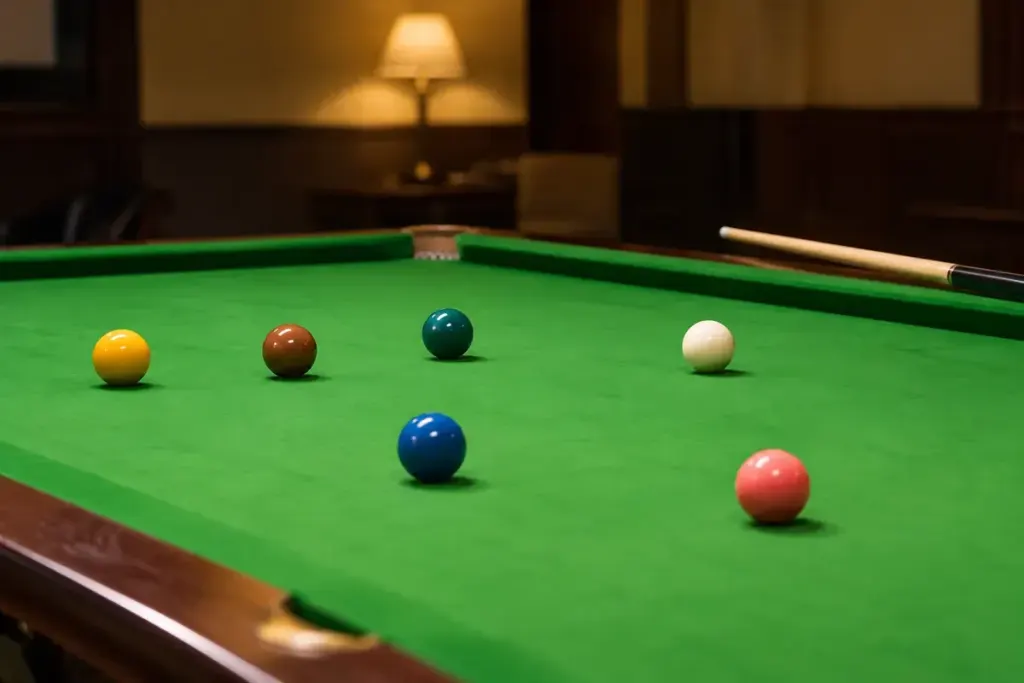
The final red disappears into a pocket, and a new viewer expects the yellow to be next. Often it is not. Understanding the colour that follows that red makes the closing part of a snooker frame much easier to follow.
During the usual red-and-colour phase, a player who legally pots a red then plays a colour. Colours potted in that phase are returned to their spots under the rules. The last red does not remove that next colour opportunity.
The transition in a simple example
Imagine a player legally pots the last red, then pots the black as the following colour. The black is re-spotted. The ordered clearance then begins with yellow, followed by green, brown, blue, pink and black. Colours legally potted in that final sequence normally stay off the table.
Their values rise from two for yellow to seven for black, giving 27 points across the six-colour sequence. Those points are separate from the colour taken immediately after the final red. This is why a commentator may discuss more than 27 points being available when that extra colour is still due.
The WPBSA rulebook sets out the actual order of play and the treatment of fouls, free balls and other situations. The example here describes ordinary legal pots, not every possible interruption to a frame.
A useful way to watch
Instead of trying to calculate every possible score immediately, ask which ball is on before each stroke. Track whether the player is choosing a colour after a red or has reached the ordered clearance. The same black ball can be re-spotted in one phase and remain down in another.
Try writing the final sequence on a small card while watching a practice frame. Pause when a red is potted and predict the next legal option before the player moves. If a foul changes the situation, use the referee’s call and the rulebook rather than forcing the simple sequence onto an exception.