
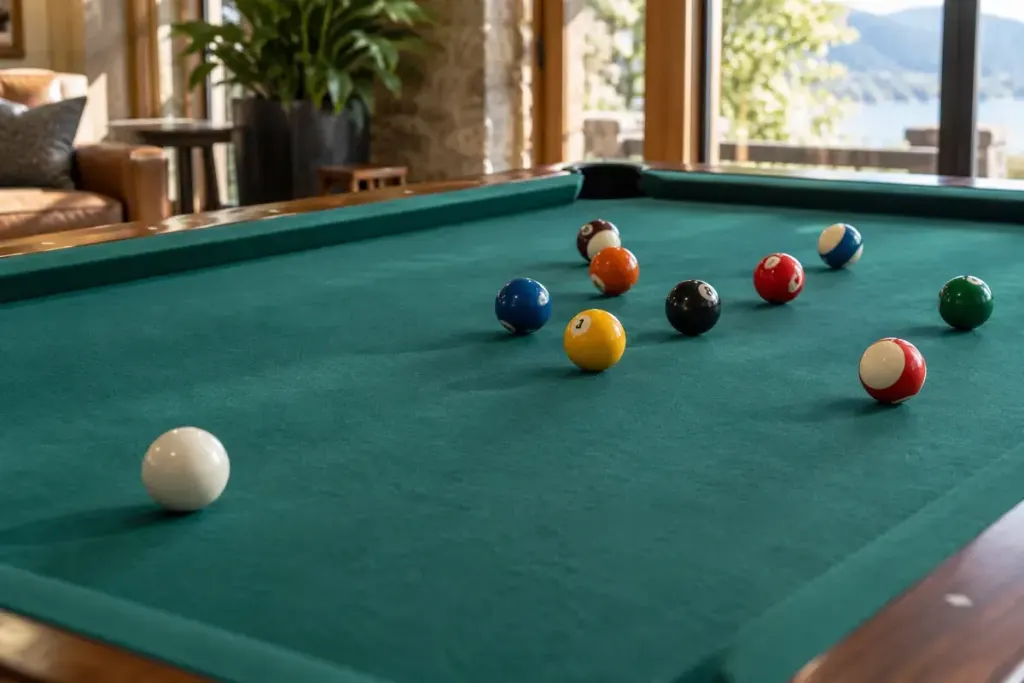
After a legal nine-ball break, a player sometimes moves the cue ball without contacting the lowest-numbered ball. If a push-out has been properly declared, that can be a deliberate legal choice rather than a missed ordinary shot.
The WPA Rules of Play, section 5.4, describe the push-out on the second shot of the rack when no foul occurred on the break. The player must make the intention known. The wrong-ball-first and no-rail-after-contact requirements are suspended for that shot; this is not a suspension of every foul rule.
The opponent receives a decision
Following a push-out without a foul, the other player chooses who shoots next. That choice explains why an extremely difficult position is not automatically a clever push-out: the opponent may return it to the player who created it.
Imagine the cue ball finishes behind a cluster after the break. The player with the next shot declares a push-out and moves it to a position offering a difficult but visible shot. The opponent can accept the table or ask the original player to take that shot. This is an illustrative situation, not a recommendation that one position is always best.
Practise the decision separately from execution
Set a simple post-break layout with a partner. Before shooting, describe the position you hope to leave and whether you would accept it yourself. After the push-out, let the partner explain the accept-or-return decision before continuing the rack.
Consult the full rulebook for pocketed balls, fouls and competition break regulations. Do not assume that a local league or video-game version uses the same procedure. Agree the applicable rules before the first rack.
The key tactical question is not merely “Can I escape this position?” It is “What choice will the next position give my opponent?” That makes a push-out a negotiation through placement rather than a free attempt to scatter trouble.