
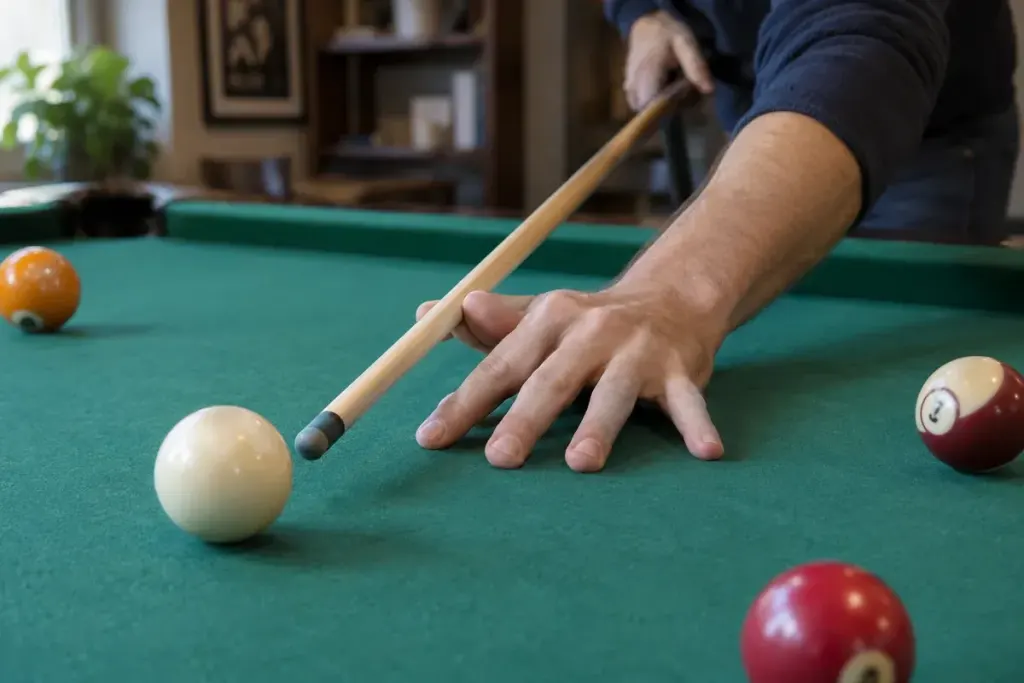
The aim looks correct, but the cue wanders during the last practice stroke. Before changing the aiming system, look at the hand supporting the front of the cue. An unstable bridge can turn a simple delivery into a moving target.
For many ordinary shots, an open bridge gives a clear view of the cue and a straightforward place to begin. Other bridges have their uses; the aim here is to make one basic arrangement dependable.
Build the support before taking the shot
Place the bridge hand comfortably on the cloth, spread the fingers enough to create a stable base, and form a guide with the thumb against the index-finger area. Adjust the hand shape so the cue can move smoothly at the intended height without squeezing it.
Dr Dave Alciatore’s article on the open bridge illustrates different ways to form that support. Hand shapes and flexibility vary, so use the demonstration as a reference rather than forcing an uncomfortable position.
Test movement without chasing a pot
Begin with gentle practice strokes and notice whether the bridge shifts, the cue catches or your fingers tense unnecessarily. Make a small adjustment, then repeat. The useful observation is whether the cue travels through the same guide while the supporting hand remains settled.
Try a short, uncomplicated shot where you can reach comfortably. A long stretch across the table adds another problem and may encourage you to judge the bridge by a difficult pot rather than the quality of the support.
Change one variable at a time
If the cue is not moving freely, check cleanliness and the fit of the guide before adding force. If your hand rocks, examine its contact with the cloth. If the tip is at the wrong height, adjust the bridge deliberately instead of lifting the entire arm at the last moment.
An illustrative practice set might use the same easy shot several times, with attention on whether the hand remains still through delivery. Stop to reset when it does not. The result on the table matters, but it is not the only feedback.
Use help for awkward positions
A rail, another ball or limited reach may call for a different bridge or a mechanical rest. Learn those separately with a qualified instructor or reliable demonstration. Do not strain to preserve the same hand shape everywhere.
A steady bridge does not guarantee every pot. It removes one avoidable source of variation, making the rest of your technique easier to understand and practise.