
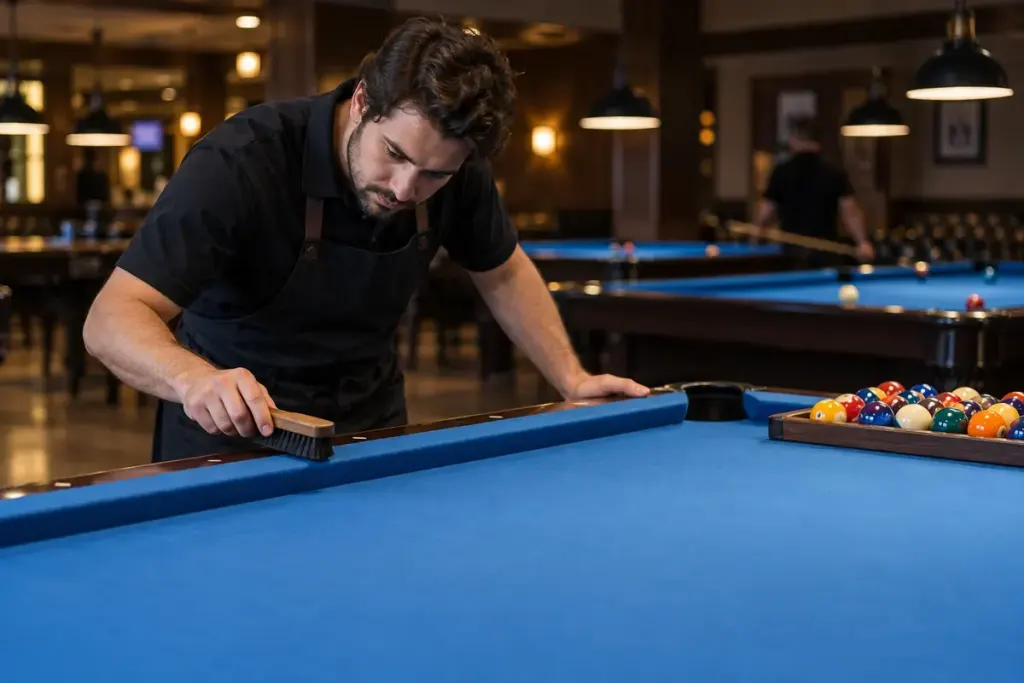
A patch of chalk dust invites a quick pass with whatever brush is nearby. On a pool table, the cleaning method should begin with identifying the cloth. A household upholstery routine is not automatically appropriate for a stretched playing surface.
Ask the owner or installer which cloth is fitted and obtain its current care instructions. Keep that information with the table’s maintenance record. Instructions for another material or another style of table may not transfer safely.
Understand the method before using the equipment
Simonis’s cloth-care guidance, for example, allows careful vacuuming with a non-rotating brush head and warns against excessive suction that can stretch the cloth. It also describes its own cleaning tool and conditions for using a damp cloth. Those details belong to that manufacturer’s guidance, not a universal instruction to vacuum every table.
Before using any permitted attachment, check that it is clean and suitable. A brush used elsewhere in the building may carry grit or cleaning residue. Follow the maker’s advice about testing equipment away from the playing surface.
Keep liquids and improvised stain treatments off the table while deciding what to do. An uncertain mark is a reason to ask the installer or manufacturer, not to work through a shelf of stronger products.
Record problems separately from routine cleaning
Photograph a new mark for the responsible person and note when it appeared. Check whether it is loose debris, wear or damage before deciding that more scrubbing is the answer. Do not promise that a worn or burned area can be cleaned back to its original condition.
For a shared venue, assign a trained person and keep the approved tools together. A short checklist can name the cloth, permitted method and the contact for a spill. It should be specific enough that a helpful substitute does not accidentally improvise.
Cleanliness supports consistent play, but restraint matters. The aim is to remove contamination while preserving the surface, rather than make the table look freshly treated at any cost.