
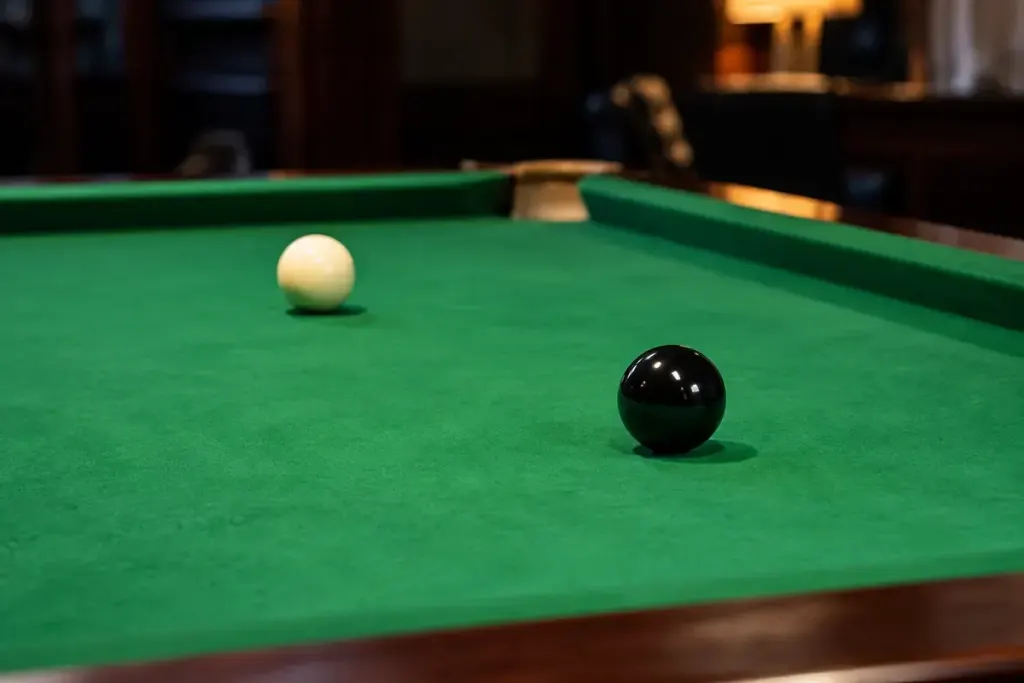
The last black drops, the scores become level and the referee puts the black back on its spot. For a new viewer, that can look like an unexplained reversal of a completed frame. It is the tie-breaking procedure commonly called a re-spotted black.
The governing detail is in Section 3, Rule 4 of the WPBSA rulebook. For an ordinary tied frame, the black is spotted, the players draw lots for choice of playing, and the next player begins with the cue-ball in hand. The first pot or infringement ends the frame. This is not a new full frame with the reds restored.
Three observations make the restart easier to follow:
- The choice matters. Winning the draw does not mean the player must automatically take the opening shot. Watch who is nominated to play.
- The starting position changes. The cue-ball is played from in hand, subject to the rules for that position, rather than simply from where it stopped after the previous black.
- A foul can settle it. Potting the black is not the only way the sequence can end.
For a practice discussion, imagine two players deciding whether the opening pot is worth attempting. A very ambitious shot may leave the black available if missed. A safety can make the opponent solve a more awkward position, but it also needs accurate cue-ball control. There is no universal opening choice that suits every table or player.
When watching a replay, pause before the first stroke and predict where both balls might finish after a miss. That exercise reveals why a player may choose restraint when only one object ball remains. The simplicity of the layout hides a sharp change in risk: there is no long scoring visit available to repair an error afterward.
For formal play, use the current rulebook and the referee’s instructions, including any special competition format. A televised event using a special deciding procedure should not be assumed to redefine every club match.