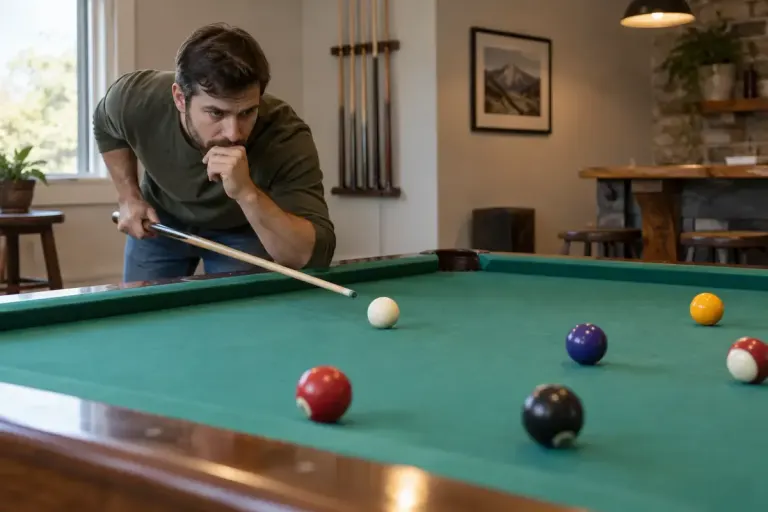
Pool Technique
A Pool Safety Shot Can Work Without Potting a Ball
Learn to judge a defensive pool shot by the next shot it leaves, rather than treating every turn without a pot as a failure.

Better sessions, one considered shot at a time.
Learn to judge a defensive pool shot by the next shot it leaves, rather than treating every turn without a pot as a failure.
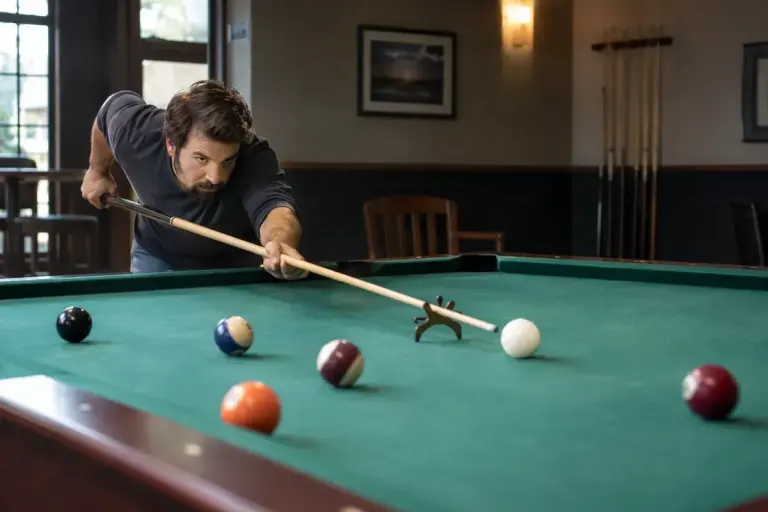
A mechanical bridge can make a distant pool shot more controlled. Learn the rest position and cue movement before attempting an awkward reach.
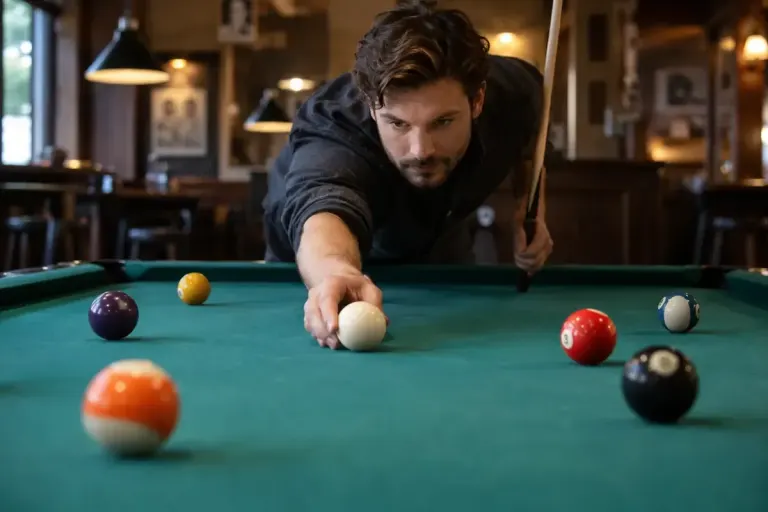
Understand the difference between unrestricted cue-ball placement and placement behind the head string, then practise choosing a position under the rule you are using.
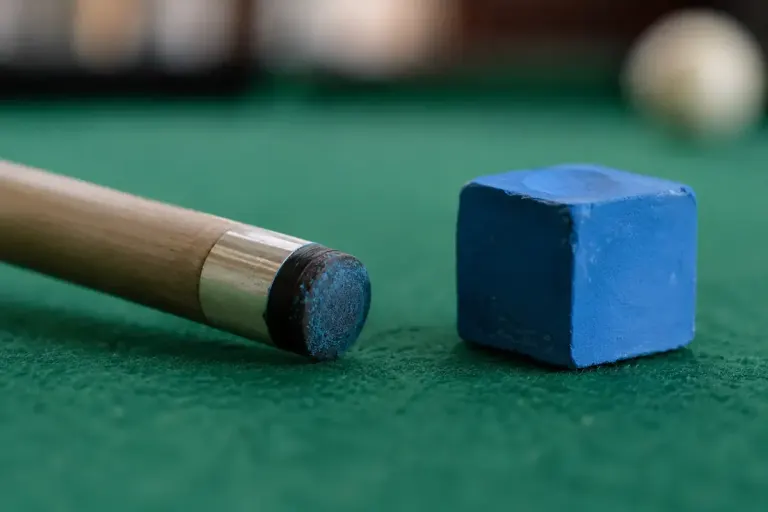
Inspect and chalk a cue tip evenly, keep chalk off the table, and separate a preparation problem from a stroke problem.
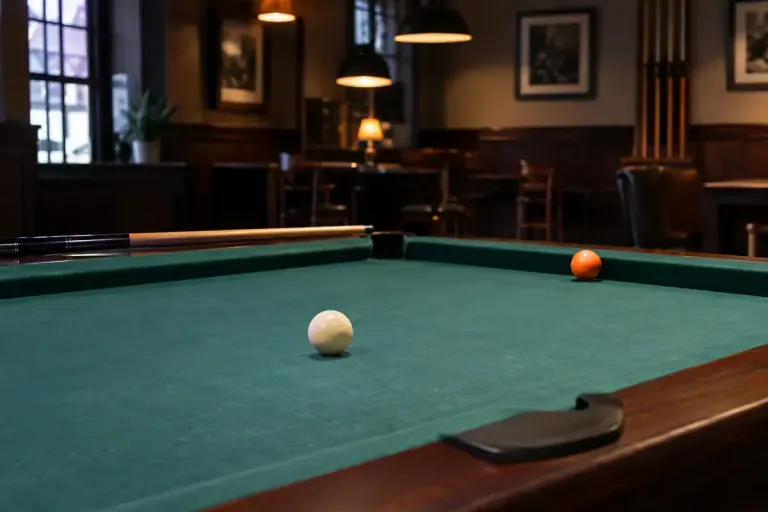
Use a simple bank-shot practice to observe how speed affects the rebound without confusing the result with changing aim or side spin.
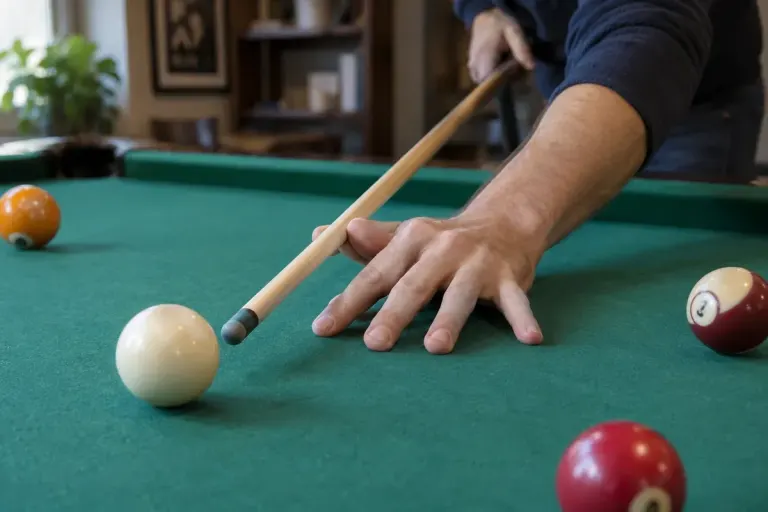
Build a repeatable open bridge for pool by checking hand stability, cue movement and comfortable height before adding speed or spin.
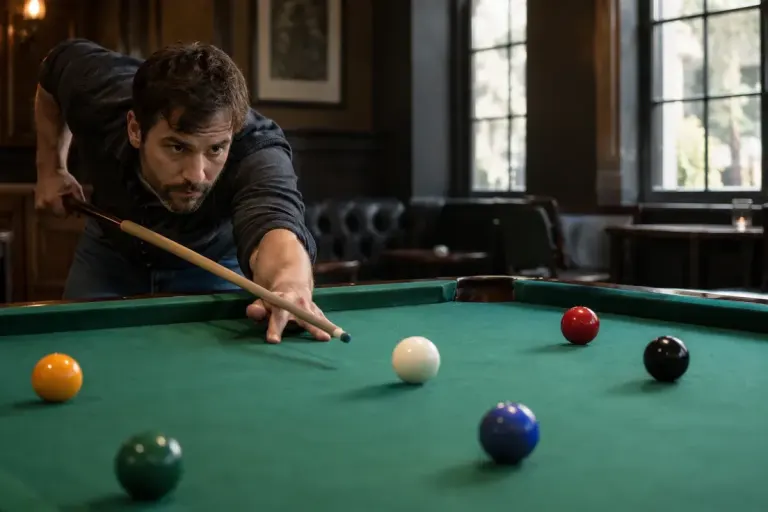
Learn from a missed pool shot by separating the object-ball result from cue-ball direction and speed, then repeat a simpler version.
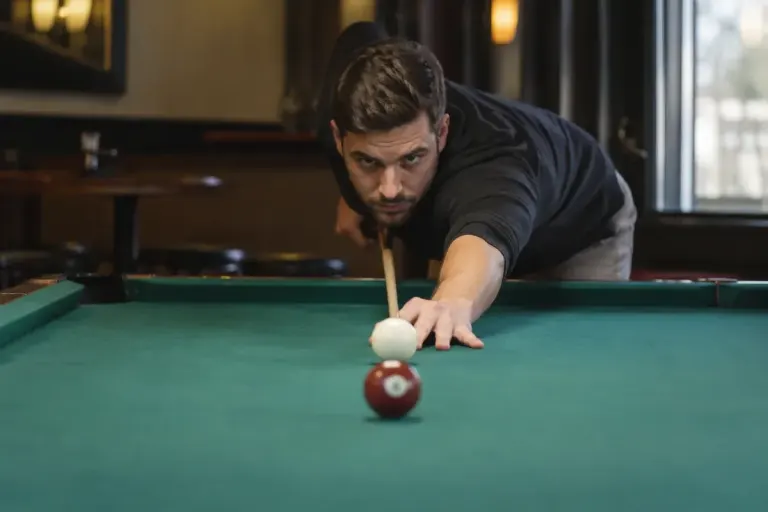
A simple stop shot reveals cue-ball control more clearly than a difficult pot. Set up a repeatable practice and change one variable at a time.
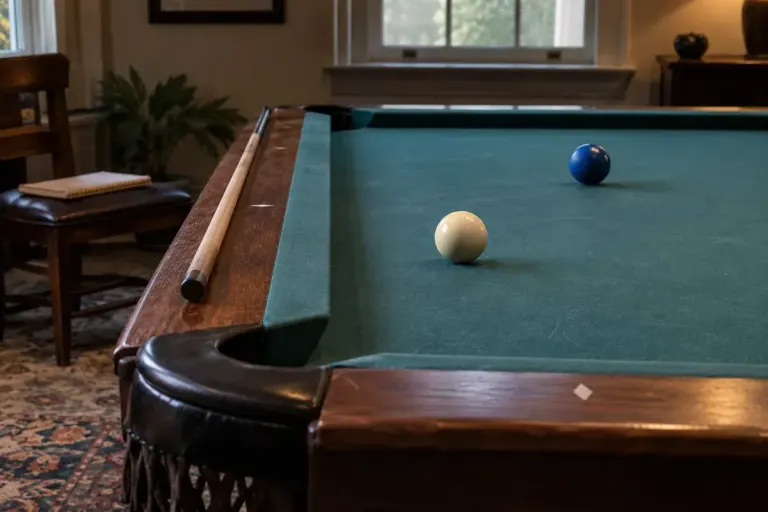
Build a focused pool practice session by repeating a clearly described setup, recording both the pot and cue-ball result, and changing one variable at a time.